
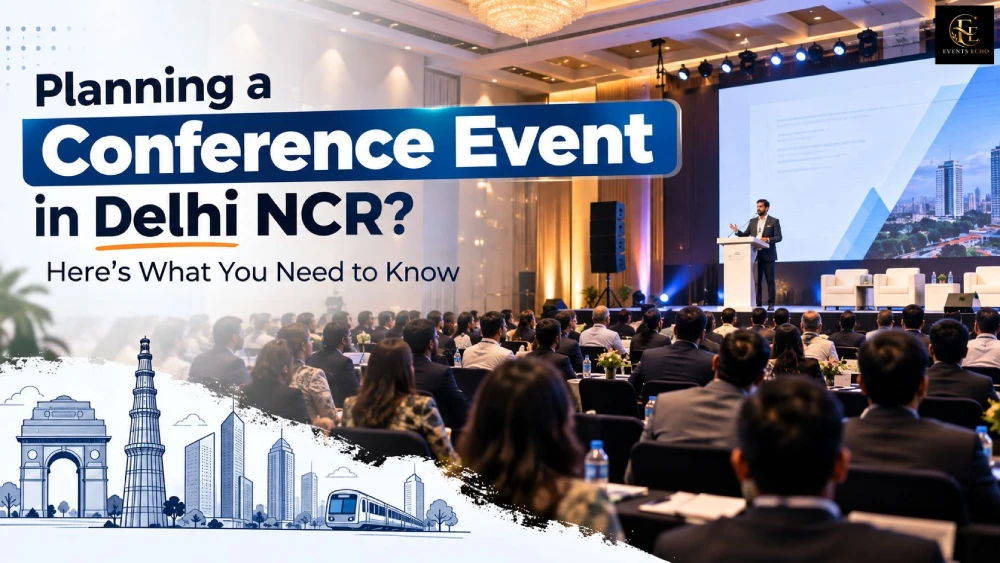
 Planning a corporate conference may sound simple at first. You book a venue, invite the speakers, arrange the seating, and prepare a schedule. But as the event date gets closer, you realise there are many small details that need attention.
Will the venue comfortably accommodate everyone? Is the sound system suitable for presentations? Who will manage guest registrations? What happens if a speaker arrives late or the presentation equipment stops working?
These are the questions that often make conference planning more challenging than expected.
A successful conference event is not just about bringing people together in one place. It is about creating an environment where people can share ideas, build professional relationships, learn something valuable, and make the most of their time.
Whether you are planning a leadership meeting, an industry conference, a corporate seminar, or a large business gathering in Delhi NCR, understanding the planning process can make a real difference.
In this guide, we will walk through the important parts of organising a conference, common mistakes to avoid, and how professional event planning support can make the entire process easier.
Start With a Clear Purpose for Your Conference
Before looking for venues or discussing decoration, ask yourself one simple question:
What do we want to achieve through this conference?
Every conference has a purpose. Some companies organise conferences to introduce new business ideas, while others bring together industry professionals for networking, learning, or collaboration.
For example, a technology company may host a conference to discuss upcoming industry trends. A growing organisation may arrange an annual leadership conference to review its progress and future plans.
Although both are corporate conferences, their requirements can be quite different.
Start by understanding:
- The main objective of the conference.
- Who will attend and what they expect.
- The estimated number of participants.
- Whether the event will be physical, virtual, or hybrid.
- The type of presentations, discussions, and networking sessions required.
- What participants should take away from the event.
When these points are clear, decisions about the venue, budget, schedule, and other arrangements become much easier.
A well-defined purpose also helps you avoid spending money on arrangements that do not contribute to the actual event experience.
Set a Realistic Budget Before Making Bookings
One of the most common challenges in conference planning is managing expenses.
It is easy to focus on the venue cost and forget about the many other arrangements needed to make the event successful.
Depending on the conference size and requirements, your budget may need to cover:
- Venue rental and meeting spaces.
- Stage, seating, and conference furniture.
- Microphones, sound systems, LED screens, and projectors.
- Lighting and technical equipment.
- Branding materials and directional signage.
- Food, beverages, and hospitality.
- Guest registration and welcome arrangements.
- Speaker travel and accommodation.
- Photography and videography.
- Event coordination and support staff.
Instead of creating a rough budget based only on the expected guest count, prepare a detailed expense plan.
Separate essential arrangements from optional additions. This will help you identify where you should spend more and where you can make adjustments.
For example, clear sound and a properly functioning presentation screen are usually more important for a business conference than elaborate stage decoration.
It is also sensible to keep a small contingency amount for unexpected requirements.
A practical tip: Always check what is included in the venue quotation. Basic furniture, internet access, audiovisual equipment, and technical support may be charged separately.
Choose a Conference Venue That Works for Your Guests
Venue selection is one of the biggest decisions in conference planning.
A beautiful venue may look impressive in photographs, but that does not necessarily mean it is the right choice for your event.
The best venue is one that supports your conference requirements and makes the experience comfortable for attendees.
Location and Accessibility
Delhi NCR offers many conference venue options across Delhi, Gurgaon, Noida, and Greater Noida.
But choosing the right area depends on where your guests are travelling from.
If most attendees work in Gurgaon, selecting a nearby venue may reduce travel time. Similarly, if the audience includes professionals from Noida and Greater Noida, accessibility from those locations should be an important consideration.
For guests travelling from other cities, connectivity to airports, railway stations, and hotels may also matter.
Seating Capacity and Layout
A venue should have enough space for your expected audience without feeling too crowded.
You should also consider the event format.
For instance:
- Theatre-style seating can work well for keynote presentations.
- Classroom-style seating is useful when attendees need tables for writing or laptops.
- Round-table arrangements are suitable for group discussions and networking.
- Boardroom setups work better for smaller leadership meetings.
The layout should allow comfortable movement, clear visibility of the stage, and easy access to refreshments, washrooms, and exits.
Technical Facilities
Before confirming the venue, check the availability and suitability of microphones, speakers, display screens, Wi-Fi, power connections, and backup arrangements.
A venue visit can help you identify problems that may not be obvious from photographs or brochures.
Also review accessibility requirements, emergency exits, parking facilities, and any permissions applicable to your event.
Remember: A conference venue should be selected for how well it functions, not just how attractive it looks.
Create a Conference Agenda That Respects Everyone’s Time
A conference can have excellent speakers and a great venue, but without a well-planned agenda, the experience may still feel disorganised.
A clear event schedule helps guests understand what to expect and allows speakers, organisers, and technical teams to work together.
Your agenda should include registration time, opening remarks, keynote sessions, panel discussions, refreshments, networking opportunities, and closing activities.
For example, a one-day business conference might follow a schedule like this:
| Time | Conference Activity |
| 9:00 AM – 9:30 AM | Guest registration and welcome tea |
| 9:30 AM – 10:00 AM | Opening remarks and introduction |
| 10:00 AM – 11:00 AM | Keynote presentation |
| 11:00 AM – 11:15 AM | Tea and networking break |
| 11:15 AM – 12:30 PM | Industry panel discussion |
| 12:30 PM – 1:30 PM | Lunch |
| 1:30 PM – 3:00 PM | Business sessions and presentations |
| 3:00 PM – 3:30 PM | Interactive Q&A |
| 3:30 PM – 4:00 PM | Closing remarks and networking |
This is only an example. The actual agenda should depend on your event goals, audience, and speakers.
Try not to fill every available minute with presentations. People need short breaks to refresh themselves, have conversations, and absorb information.
It is also helpful to keep some buffer time between important sessions in case a presentation runs longer than planned.
Give Speakers and Presenters the Support They Need
Speakers are often one of the main reasons people attend a conference.
However, even an experienced speaker may struggle if the presentation arrangements are not properly managed.
Imagine a keynote speaker reaching the stage and discovering that the microphone is not working or the presentation file is incompatible with the system.
A few minutes of technical confusion can affect the entire event schedule.
To avoid such situations, collect speaker requirements well in advance.
Confirm the presentation duration, display format, microphone preference, video content, and any other technical needs.
Share the final schedule and arrival details with each speaker.
If possible, arrange a short technical check before the conference begins.
For larger events, assigning a dedicated person to coordinate with speakers can make communication easier and prevent last-minute confusion.
Make Guest Registration and Hospitality Simple
The guest experience begins before anyone enters the conference hall.
It starts with the invitation, registration process, and information shared before the event.
If attendees receive unclear directions, struggle with registration, or wait in long queues, they may already feel frustrated before the opening session.
A smooth registration process creates a positive first impression.
Depending on the conference size, you can arrange online registrations, QR-based check-ins, pre-printed name badges, welcome desks, and separate counters for speakers or special guests.
For a larger conference, having trained staff at the entrance can help guests find their way without unnecessary delays.
Hospitality also matters throughout the day.
Simple arrangements such as drinking water, comfortable seating, clear signage, organised refreshment counters, and timely lunch service contribute to a better experience.
If the event includes outstation speakers or delegates, travel assistance and accommodation coordination may also be necessary.
These may seem like small details, but they often determine how comfortable and well-organised a conference feels.
Don’t Leave Audio, Visuals, and Technology Until the Last Minute
Technology plays an important role in almost every modern conference event.
From displaying presentations to ensuring speakers are heard clearly, technical arrangements directly affect communication.
Depending on the event, you may need:
- Professional microphones and sound equipment.
- Projectors, LED screens, or display panels.
- Stage and audience lighting.
- Presentation laptops and switchers.
- Video recording or live-streaming equipment.
- Stable internet connectivity.
- Backup power and technical support.
For hybrid conferences, where some participants join online, additional attention is required for cameras, remote speaker connections, streaming platforms, and audio quality.
It is important to remember that expensive equipment does not automatically guarantee a good result.
What matters is whether the technical setup suits the venue and audience.
For example, a small seminar room may only need a basic presentation setup, while a large conference hall may require multiple screens and a more advanced sound system.
A complete technical rehearsal before the event can help identify problems early.
Make sure someone is responsible for managing equipment during the conference rather than relying on last-minute assistance.
Keep Conference Branding Professional and Consistent
Conference branding is not simply about placing a company logo behind the stage.
It helps attendees recognise the event and gives the venue a consistent visual identity.
Depending on the purpose and scale of your conference, branding may include welcome signage, registration backdrops, stage graphics, digital presentation templates, directional signs, and photo areas.
The design should match the company’s identity and the tone of the gathering.
For example, an annual leadership conference may benefit from a clean, professional setup with simple graphics and clear messaging.
An industry networking conference may need more visible event signage to guide people between sessions and meeting spaces.
Avoid placing too many promotional materials in areas where they may distract from presentations or make movement difficult.
Good branding should support the event experience, not dominate it.
Why Working With a Conference and Event Planner Can Help
As the planning progresses, you may find yourself communicating with several different vendors.
The venue team needs seating details. The audiovisual vendor wants the stage layout. The catering team needs the final guest count. Meanwhile, speakers are requesting updates to the agenda.
Managing all these conversations alongside regular office responsibilities can become difficult.
This is where working with an experienced conference and event planner can be useful.
A professional planner helps bring the different parts of the event together.
Instead of handling every small arrangement separately, your organisation can work with a coordinating team responsible for keeping the preparations aligned.
The planner may assist with venue coordination, vendor communication, technical requirements, guest arrangements, event schedules, and on-site execution.
This does not mean your company loses control over the event.
Your team still makes the important decisions about the conference’s goals, priorities, and budget. The event planner supports those decisions through organised planning and practical execution.
For companies managing a large audience, multiple speakers, or several conference sessions, this support can be especially valuable.
What to Look for in Conference Event Planning Companies
Choosing professional support is an important decision, particularly when your event involves business leaders, clients, employees, or industry professionals.
Not all conference event planning companies offer the same services or working approach.
Before selecting a planning partner, take some time to understand how the company manages its projects.
Experience With Corporate Events
Ask whether the team understands business conferences, seminars, leadership meetings, and similar professional gatherings.
Corporate events often require precise scheduling, organised communication, and a higher level of technical coordination.
Clear Scope of Services
Check what the company will actually manage.
Will the team support venue selection, stage production, guest registration, catering, and event-day coordination? Or will some arrangements remain your responsibility?
A clearly defined scope can prevent misunderstandings later.
Transparent Budget Planning
A professional company should be able to explain the estimated expenses and identify which costs are included or excluded.
Ask how changes, additional requirements, and third-party vendor charges will be handled.
Communication and Coordination
Conference planning requires regular updates.
Choose a team that listens carefully, responds clearly, and understands the purpose of your event.
Practical Problem-Solving
Unexpected situations can happen at any event.
The important question is how prepared the team is to respond.
Ask about technical backups, vendor coordination, contingency planning, and how responsibilities will be managed on the event day.
The right planning partner should make the process clearer and easier for your organisation.
How Early Should You Start Planning a Conference?
The planning timeline depends on the size and complexity of the event.
A small internal conference may require less preparation than a large industry gathering with multiple speakers, sponsors, and outstation delegates.
As a practical starting point, consider the following timeline for a moderately sized corporate conference.
8–12 weeks before the event
Define the conference objective, estimate the budget, shortlist venues, and identify key speakers.
6–8 weeks before the event
Confirm the venue, finalise important vendors, develop the event agenda, and begin guest invitations or registrations.
3–4 weeks before the event
Review technical requirements, collect presentation details, confirm branding materials, and coordinate catering arrangements.
1–2 weeks before the event
Review registrations, reconfirm the schedule, brief vendors, and complete major preparation checks.
1 day before the event
Complete venue setup wherever access permits, test equipment, inspect signage, and conduct the final coordination briefing.
These are suggested planning windows, not fixed rules. Large conferences may require several additional months, especially when venue availability, speaker schedules, or travel arrangements are complex.
Starting early generally gives you more flexibility when selecting venues and arranging services.
Common Conference Planning Mistakes to Avoid
Even well-planned events can face difficulties. However, many common problems can be reduced through careful preparation.
1. Choosing a venue without checking its facilities
Always review seating capacity, technical requirements, accessibility, and available support before confirming a booking.
2. Creating an overcrowded event schedule
Too many sessions without sufficient breaks can leave attendees tired and reduce engagement.
3. Ignoring the guest experience
Registration, signage, seating, food, and basic comfort should be considered during planning, not just on the event day.
4. Not having a backup plan
Technical issues, delayed speakers, and last-minute changes can happen. Keep alternative arrangements ready for important activities.
5. Leaving coordination to the last minute
Every vendor and team member should understand their responsibilities before the conference begins.
One of the simplest ways to avoid these problems is to maintain a central event plan that includes important contacts, deadlines, schedules, and responsibilities.
What Should Happen on the Conference Day?
The actual event day is where all the planning comes together.
Even with a detailed schedule, someone needs to make sure the arrangements are progressing as expected.
Before guests arrive, the coordination team should inspect the venue and confirm that registration counters, seating, microphones, screens, presentation systems, and hospitality arrangements are ready.
During the event, responsibilities may include:
- Welcoming attendees and supporting registration.
- Coordinating speaker arrivals and presentations.
- Keeping conference sessions on schedule.
- Managing communication with technical teams.
- Supervising catering and refreshment arrangements.
- Responding to guest requests.
- Handling unexpected changes without disrupting the event.
Clear communication between the organising team, venue staff, and vendors is especially important.
At the end of the conference, the work is not necessarily finished.
You may still need to coordinate event photographs, recordings, vendor closure, attendee feedback, and follow-up communication.
For corporate organisers, a short post-event review can provide useful insights for planning future conferences.
Conference Event Planning in Delhi, Gurgaon, Noida and Greater Noida
Delhi NCR is a major business region with companies, institutions, and professional communities spread across different cities.
Conference requirements can vary depending on the location, audience, and event format.
Conference Planning in Delhi
Delhi is a practical choice for conferences that bring together participants from different parts of the city and other regions.
While planning an event here, organisers should consider travel accessibility, the expected audience, venue facilities, and local traffic conditions.
Corporate Conferences in Gurgaon
Gurgaon has a strong corporate presence and is often considered for leadership meetings, business conferences, industry sessions, and employee gatherings.
For Gurgaon-based companies, selecting a venue that is convenient for employees and visiting delegates can simplify attendance and logistics.
Conference Events in Noida and Greater Noida
Noida and Greater Noida offer options for corporate meetings, seminars, exhibitions, and larger professional gatherings.
When planning in these locations, consider the expected guest count, transport arrangements, accommodation requirements, and technical facilities.
No matter which city you choose, the aim should remain the same: create a conference environment that allows participants to focus on the purpose of the gathering.
Making Conference Planning Easier With Events Echo
Organising a business conference involves many decisions, and it is not always practical for an internal team to manage everything alone.
At Events Echo, we understand that every conference has different requirements. A small corporate seminar may need a straightforward venue and presentation setup, while a larger business conference may involve multiple speakers, detailed guest arrangements, and extensive technical coordination.
Our approach starts with understanding what the organisation wants to achieve.
From venue and vendor coordination to conference setup, guest arrangements, and on-site management, the focus is on bringing the different parts of the event together in an organised way.
We provide conference and seminar event management services in Delhi NCR, supporting business events across Delhi, Gurgaon, Noida, and Greater Noida.
The goal is simple: help organisations spend less time worrying about arrangements and more time engaging with their guests, speakers, and attendees.
Final Thoughts
A successful conference does not happen simply because you choose a good venue or invite well-known speakers.
It comes from careful planning, clear communication, thoughtful guest arrangements, and proper coordination between everyone involved.
Every detail matters, from how easily attendees find the registration desk to how smoothly presentations move from one speaker to the next.
If you are preparing for an upcoming business conference, start by defining your objectives, understanding your audience, and creating a realistic plan.
And when the event requires additional support, working with an experienced planning team can help you manage the process with greater confidence.
Planning an upcoming conference in Delhi NCR? Explore how Events Echo can help you organise the venue, technical setup, guest arrangements, and event-day coordination according to your requirements.
Frequently Asked Questions